

Imported Stone · 2026
Top Imported Marbles
in Pakistan.
Which imports are genuinely worth the ocean they crossed, what actually drives the price, and how to tell a real premium slab from a dressed-up commercial one.
What you are actually
paying for.
An imported marble costs three or four times its Pakistani equivalent, and clients are rarely told why in any useful detail. It is worth knowing, because the breakdown explains which imports are worth buying and which are a way of paying a premium for very little.
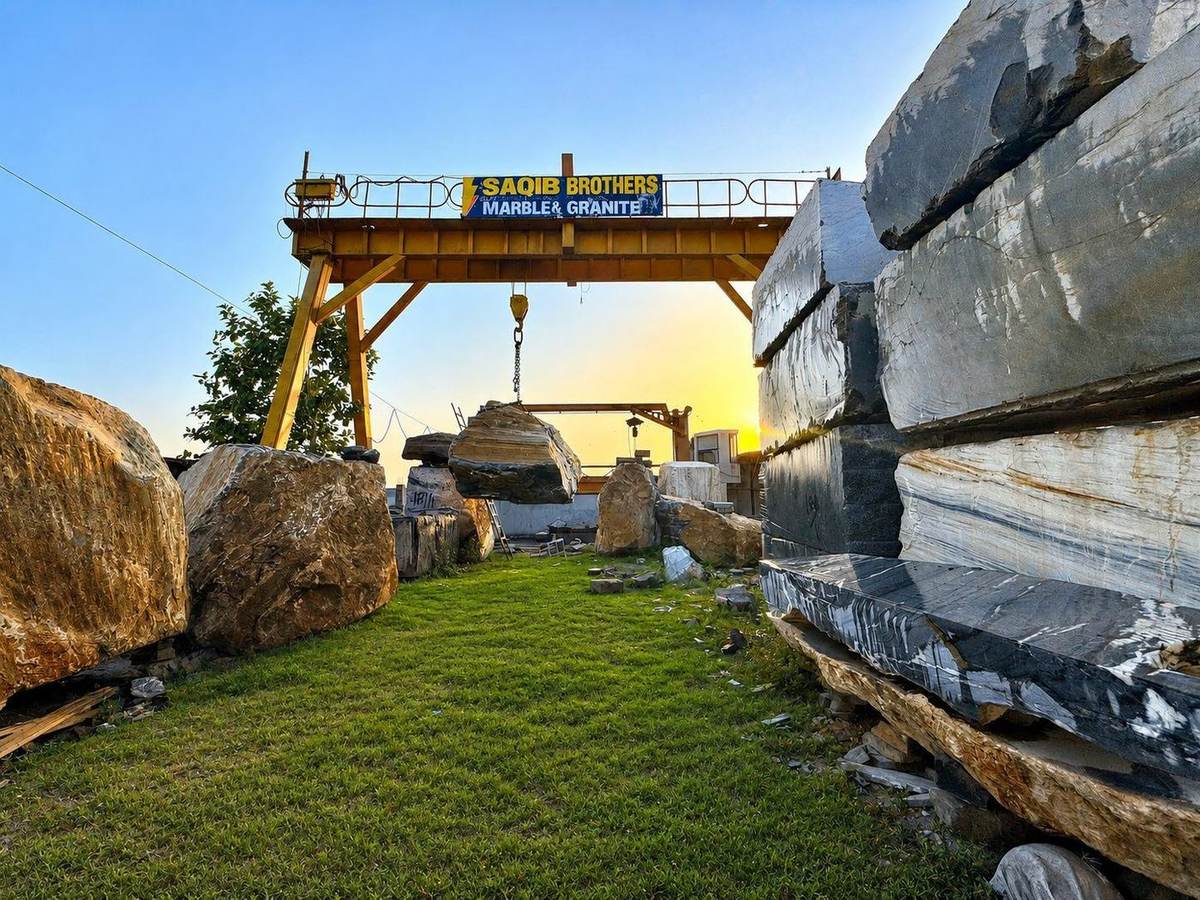
Start with the block. Reaching a quarry in Italy, Greece or Portugal and selecting a block in person costs money before anything is cut. Buyers who skip that step — purchasing from a photograph or taking whatever a container broker offers — save it, and the saving shows up later in the slab.
Then the ocean. Marble is dense and heavy, so sea freight is charged on weight and it is not a small number. Add import duty, port handling, demurrage if clearance drags, and inland transport from Karachi to Lahore. By the time a block reaches our yard, a meaningful part of its cost is logistics that added nothing to the stone itself.
Which leads to the honest conclusion: import only what Pakistan cannot produce. Where a local stone does the same job, the freight is simply money spent on distance. Where the veining genuinely does not exist here — and for a handful of stones it truly does not — the import is the only route, and it is worth it.
Worth the Freight
Six imports
that justify themselves.
01Statuario
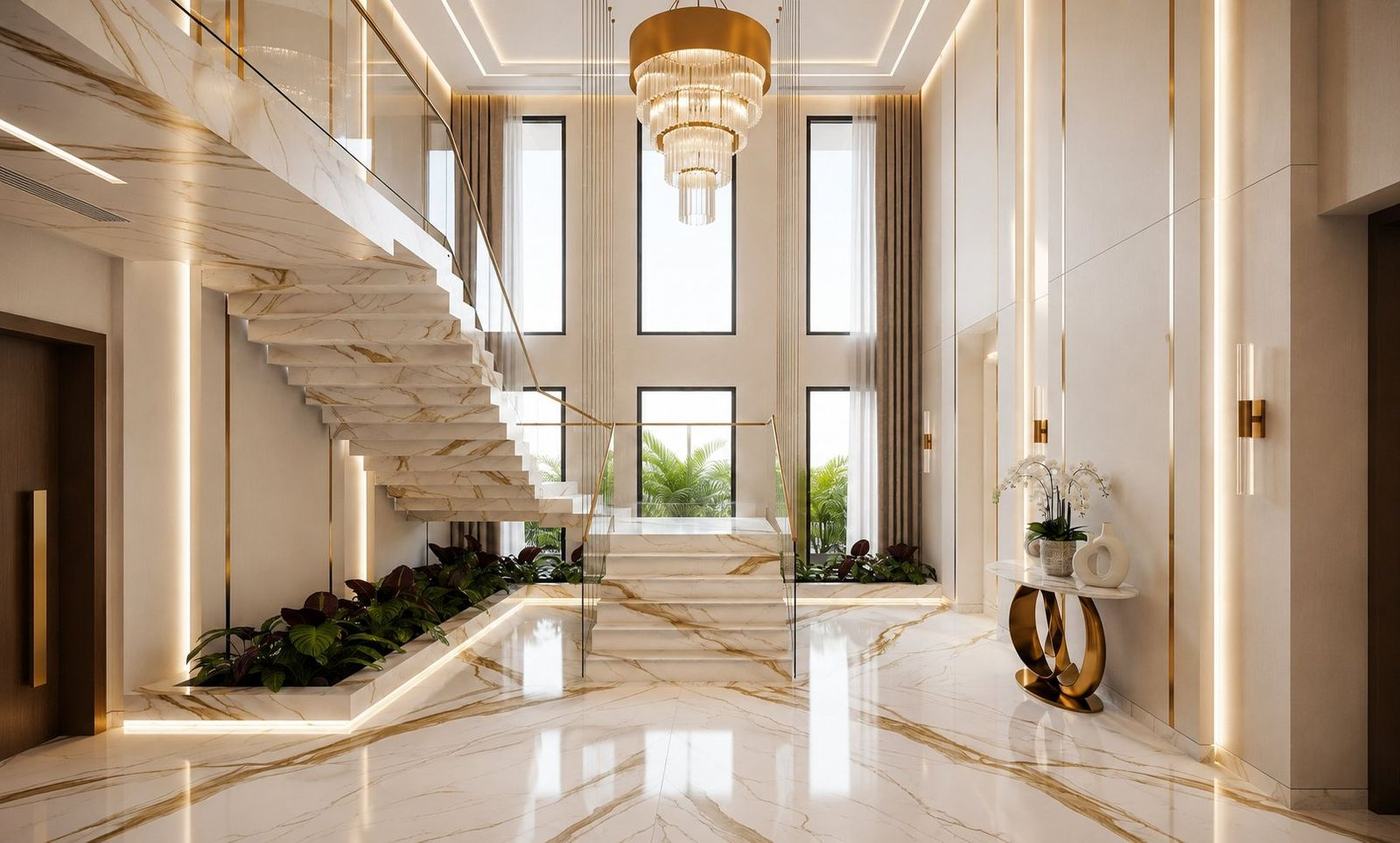
The EmperorBold grey veining across a bright white ground, and the reason people import marble at all. Made for book-matched double-height walls where the stone is the architecture rather than the surface. Nothing produced in Pakistan approaches it and nothing else photographs like it. Softer than Ziarat, so keep it out of kitchens and entrances — it belongs where it will be admired, not scrubbed.
Explore → 02
02Calacatta Gold
The StatementThick gold and warm grey veining on white — rarer than Statuario, more dramatic, and priced accordingly. Its character varies enormously between lots, which makes buying from a sample genuinely risky and viewing the actual slabs essential. For one feature wall or an island face where budget allows a single indulgence, it is the stone people remember.
Explore → 03
03Carrara White
The Sensible ItalianFiner, cooler and far less expensive than its famous neighbours, and across a large floor that difference funds the fabrication quality that decides how the job actually looks. It carries genuine Italian provenance for clients who want it. Less tolerant of hard water than Ziarat, so we steer it to bedrooms and formal rooms rather than working areas.
Explore → 04
04Volakas
The Soft AlternativeWhite with grey-mauve veining that runs softer and cloudier than Italian stone — quieter in a room, and often the better choice where Statuario would overwhelm. Greek marble is generally dense and takes an excellent polish. Underused in Pakistan largely because fewer importers bother sourcing it, which is precisely why it still looks fresh here.
Explore → 05
05Crema Marfil
The Warm ImportSpain’s signature cream, uniform and fine-grained, and the most forgiving imported marble we stock. Its even tone hides hard-water marking better than any white, and it sits comfortably under the warm evening light Pakistani homes favour. Available in consistent large lots, which makes it a rare import that works for whole floors rather than accents.
Explore → 06
06Panda White
The Graphic OneStark black veining across bright white, closer to ink on paper than to traditional marble veining — a genuinely modern look that no European quarry produces. It is the import we sell most for feature walls in contemporary interiors. Buy the full quantity in one lot: the drama that makes it appealing also makes lots differ noticeably.
Explore →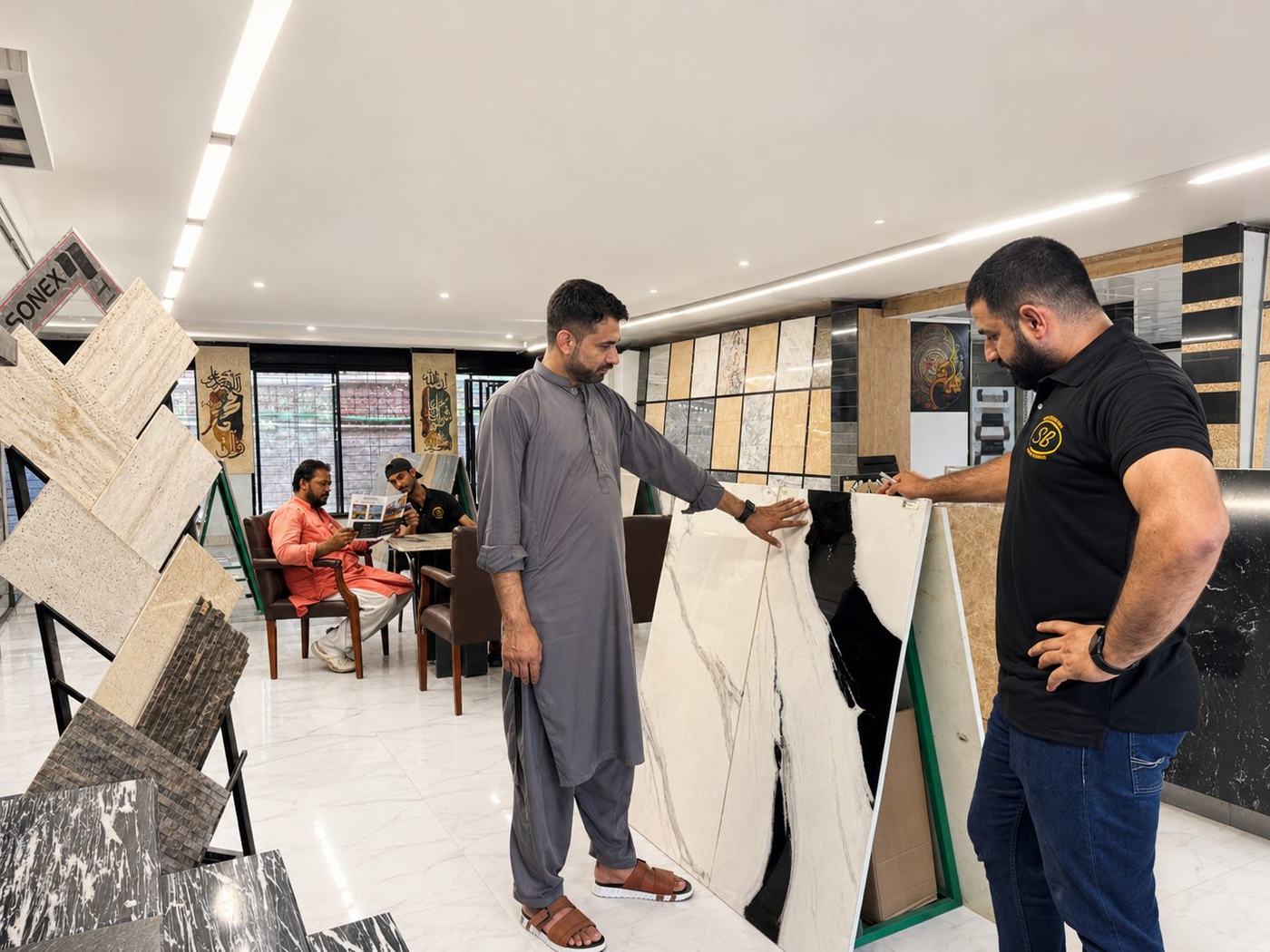
How to tell real
from dressed-up.
A large share of the stone sold as premium imported marble in Pakistan is commercial grade that has been treated to look better than it is. The treatments are legitimate and widely used. Selling the result as a premium natural grade is not, and it is the single most expensive mistake a buyer makes in this category.
Resin filling stabilises a slab with natural fissures — routine, useful, and it makes some material usable that otherwise would not be. Look at the slab in raking light rather than straight on: filled veins catch the light differently from the surrounding stone, sitting slightly flatter or glossier. Run a hand across; a filled fissure often reads smoother than the polish around it.
Colour enhancement deepens a tone chemically or with a tinted sealer. On whites it is used to brighten a greyish lot; on darker stones to intensify a weak black. Check the slab edge, where treatment is thinner or absent — if the edge colour differs noticeably from the face, you are looking at an enhanced surface rather than the stone itself.
Then ask directly, and in writing: is this filled, and is it enhanced? An honest supplier answers plainly, because both are normal. Evasion on that question tells you everything you need about the rest of the quotation. And insist on seeing the actual lot — imported stone varies between blocks far more than most buyers expect, and the slab in the brochure came from a different one.
“Import only what Pakistan cannot produce. Everywhere else, the freight is money spent on distance.”
The route a block takes
to your floor.
Understanding the chain is useful, because most of the ways an import goes wrong happen at a step the buyer never sees.
Selection comes first — at the quarry, in person, reading the cut face for fissures and colour before committing. Then loading and sea freight to Karachi, typically several weeks depending on the route. Then clearance: duty assessed, documentation checked, and the point at which delays turn into demurrage charges that someone eventually pays for.
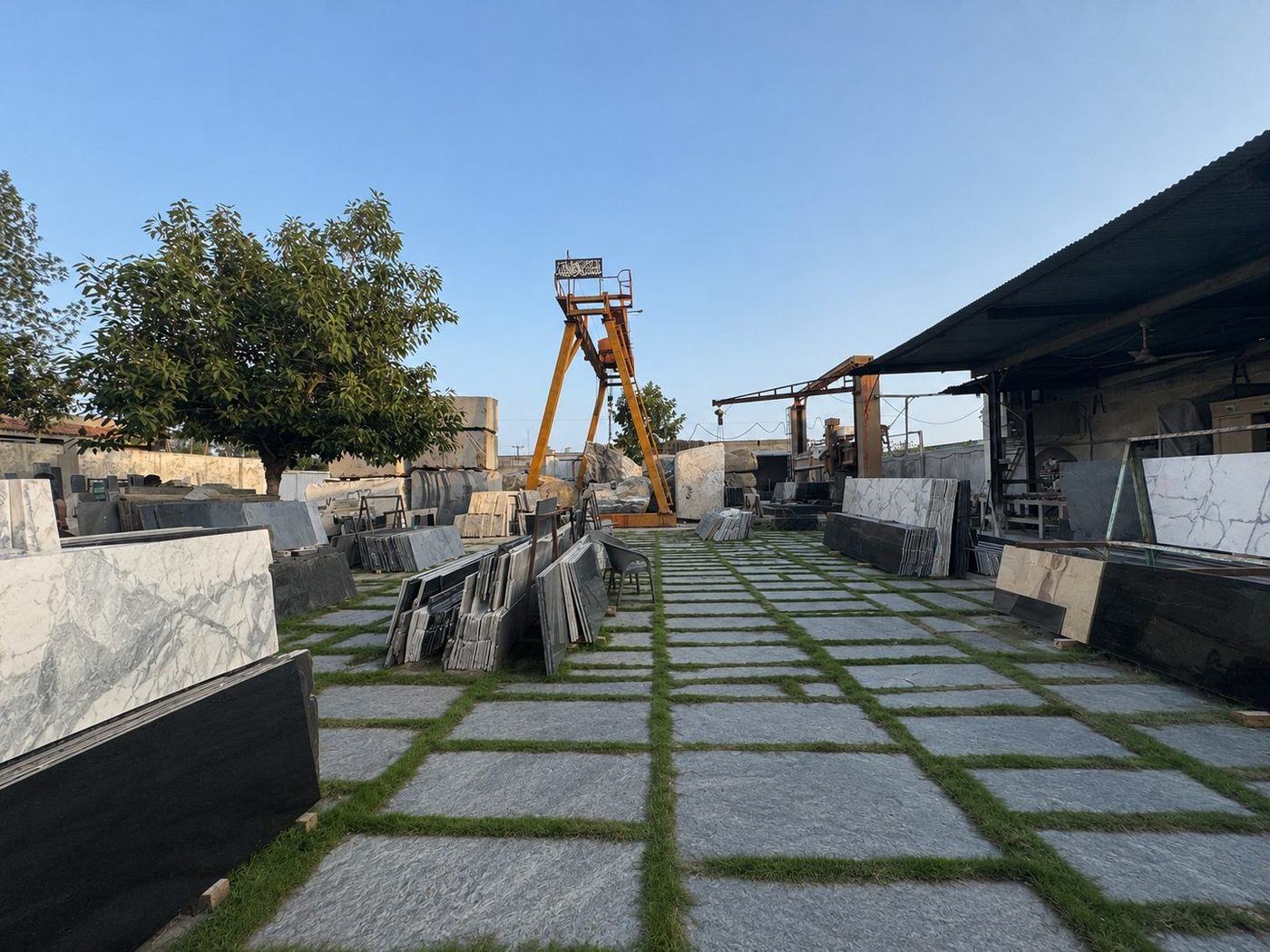
From Karachi the block travels inland by road to our yard, then onto the gang saw. Only at that moment does anyone discover what the block actually contains — and if the selection was done from a photograph, that is when an expensive mistake reveals itself. It is the reason we still fly people to quarries in an era when everything can be photographed.
Finally it goes through the polishing line and the CNC, and is laid out for book-matching if the project calls for it. From quarry face to laid floor, an imported marble project is measured in months, not weeks. Any supplier promising an imported stone tomorrow either has it on their racks already — which is fine, ask to see it — or is about to substitute something else.
Statuario and Calacatta — veining Pakistan cannot produce.
Crema Marfil — consistent lots, forgiving of hard water.
Any white a good Ziarat lot would match. Ask us honestly.
Questions we answer daily
Which imported marble is best in Pakistan?
Statuario for statement walls where bold veining is the point, and Crema Marfil for whole floors where consistency and forgiveness matter more. Calacatta Gold is the most dramatic and the most variable between lots, so it must be seen before buying.
Why is imported marble so expensive in Pakistan?
Quarry selection, sea freight charged on weight, import duty, port handling, possible demurrage, and inland transport from Karachi. A meaningful share of the price is logistics that added nothing to the stone — which is why importing only makes sense when no local stone does the job.
Is imported marble better than Pakistani marble?
Not for durability. Ziarat White is denser than several Italian whites and copes better with our water and heat. Imports win on veining that our quarries do not produce. It is a question about appearance, and treating imported as automatically superior is how buyers overpay.
How can I tell if imported marble is filled or dyed?
Look at the slab in raking light — filled veins catch light differently and often feel smoother than the surrounding polish. Check the slab edge, where enhancement is thinner; if the edge colour differs noticeably from the face, the surface has been treated. Then ask in writing, because both treatments are normal and should be disclosed.
Which countries do you import marble from?
Italy, Iran, Türkiye, Greece, Spain, Portugal, China, Vietnam and Brazil, among others — blocks are selected at origin rather than bought unseen from a container photograph.
How long does an imported marble order take?
Months rather than weeks if the block still has to be selected, shipped and cleared. Material already on our racks at Harbanspura can be cut and delivered within days — so if timing matters, ask what is in stock before specifying something that must be imported.
Is Italian marble suitable for Pakistani kitchens?
Generally no. Italian whites are softer and more porous than Ziarat, and a Pakistani kitchen produces turmeric, lemon and tamarind daily — all of which etch calcite. Use it on an island face or splashback and put granite or quartzite where the knives land.
Do you sell imported marble to other cities?
Yes — we deliver across Pakistan from our Lahore facility, and supply builders, contractors and fabricators in slab form or cut to size.
Ready when you are